
 Türkçe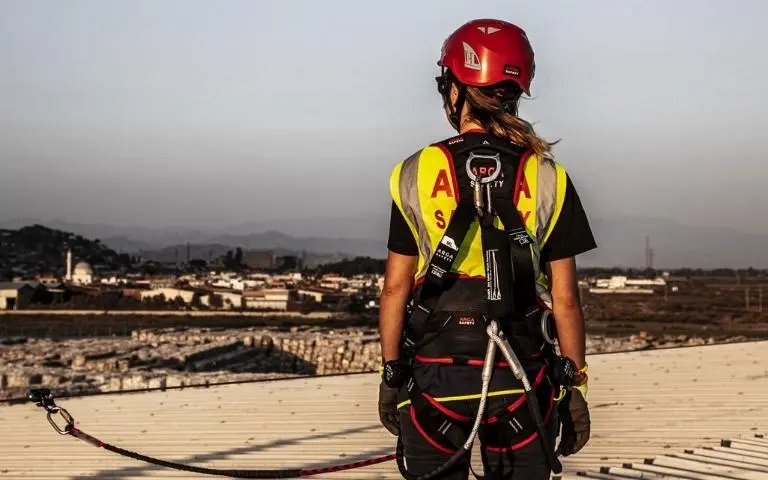
Safe Working on Lifelines Training is an expertise-oriented program aimed at the safe use of fall arrest systems installed on the roofs of industrial facilities, crane runways, or wide-span areas such as bridges. In accordance with the Occupational Health and Safety Law No. 6331, it is a legal obligation for personnel working attached to lifeline systems to know the mechanical limits of the system and safe transition protocols. Arga Safety trainings maximize the operational competence of personnel by centering on TS 13885 and EN 795 standards.
Lifeline Dynamics and System Components Analysis
Being connected to a lifeline alone does not provide full safety; it is critical to understand the system’s response to the weight of the personnel and dynamic loads (kN) at the moment of a fall. Safe working on lifelines training teaches participants the anatomy of the system. Our curriculum details the operating range of shock absorber (Energy Absorber) mechanisms, transition techniques for intermediate anchor points (Intermediate Anchors), and the impact of line tension on safety.
In this process, along with Fall Factor calculations, the compatibility of the equipment on the personnel with the type of lifeline (Horizontal/Vertical) is analyzed. Within the framework of EN 353 and EN 341 norms, methods of protection against swing risks (Pendulum Effect) that may occur during movement on the line are transferred at a professional level.
Applied Transition Techniques and Rescue Protocols
The field phase of the training focuses on continuous safety discipline on lifelines. The core technical competencies gained by the participants are as follows:
- Continuous Safety Discipline: “Zero risk” maneuvers during line transitions through the use of twin-leg lanyards (EN 355).
- Glider and Roller Transition Systems: Technical use of systems (Glider/Runner) that ensure moving on the lifeline without getting stuck.
- Self-Retracting Fall Arresters: Integration of systems (EN 360) that lock the position on the line and immediately arrest the fall.
- Rescue and Evacuation Operations: Transfer of personnel suspended on the lifeline to a safe area using mechanical advantage pulleys and descenders.
- System Supervision and PPE Inspection: Pre-operational inspection of wire rope wear, anchor corrosion, and indicators (Fall indicators).