

 Türkçe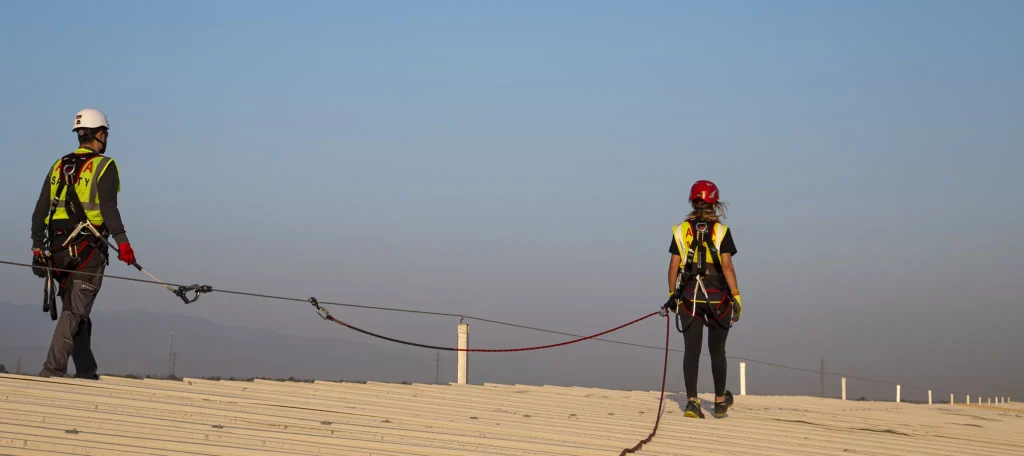
What is a Horizontal Lifeline? Application Areas and System Features
Horizontal lifelines are the cornerstone of passive fall arrest systems, ensuring the safe mobility of personnel in industrial plants and construction works. Offering continuous anchorage support, these horizontal lifeline solutions establish a vital safety corridor by allowing the operator to integrate into the system via a safety harness and lanyard.
Technical data on fall arrest systems: Horizontal Lifeline Category
Our permanent lifeline solutions: Review Permanent Models
Horizontal Lifeline Application Areas and Risk Analysis
The use of this equipment in working at height operations is not just a preference but a legal obligation. A professional horizontal lifeline provides primary protection, especially in areas where the clearance distance is limited or collective protection measures are insufficient, such as:
- Solar power plant (GES) installation and panel cleaning processes on roof structures.
- Gutter line maintenance and risky zones around polycarbonate skylights.
- Maintenance operations on gantry crane tracks and overhead crane walkways.
- Fall risks at over-vehicle (truck, tanker, wagon) filling and discharging points.
- Access ways for industrial chimneys and facade cleaning units.
Structural Elements Installed On:
Systems are integrated onto reinforced concrete slabs, steel purlins, or sandwich panel roofs using special adapter plates. Particularly in coastal facilities where the risk of corrosion is high, the material quality of the horizontal lifeline components is the primary factor determining the operational life of the system.
ARON Series: Technical Parameters and Engineering Details
Developed within ARGA SAFETY, the ARON horizontal lifeline is designed to absorb the dynamic shock (impact force) generated during a sudden fall. By absorbing energy, this anchorage line both limits the impact force on the operator’s body and protects the system by minimizing the load transmitted to structural points.
Engineering Advantages of the System:
- High-Strength Energy Absorber: Stainless shock absorber design that dissipates the impact force during a fall.
- Grade 316 Corrosion Resistance: Use of stainless steel resistant to acidic and humid environments in all components.
- Modular Anchorage Structure: End and intermediate brackets that preserve structural integrity thanks to their weldless, single-piece design.
- Static and Dynamic Tests: Full compliance with EN 795:2012 TYPE C and TS 16415 standards for up to 8 simultaneous users.
- System Lifespan: Durability of up to 20 years outdoors when properly installed and subjected to annual inspections.
All components are manufactured from Grade 316 stainless steel, making them suitable for the safe use of 8 people simultaneously in demanding industrial sites. The structural anchorages of the ARON Permanent Horizontal Lifeline are manufactured from hot-dip galvanized steel, retaining their function for many years outdoors without damage.
Static Calculation and Horizontal Lifeline Installation Principles
A correct horizontal lifeline installation begins with static calculations during the project planning stage. It must be technically verified whether the installation surface (concrete, steel, panel) can withstand loads of 13 kN or above as required by standards. Especially skylight areas on roofs are highly critical spots where personnel fall accidents occur most frequently.
Technical Steps Followed During Installation:
- Analysis of structural load-bearing capacity and net clearance distance.
- Line design minimizing pendulum effect and swing risks.
- Installation of components in accordance with torque values and tension adjustment.
- Initial commissioning inspection for the system’s periodic audit schedule.
As ARGA SAFETY, you can watch our 3D animation guide highlighting the importance of correct design in working at height safety:
Horizontal Lifeline Design and Installation Guide
Mobile and Over-Vehicle Fall Arrest Solutions
High-strength mobile units come into play in sites where permanent line installation is not feasible:
WP-1200 Over-Vehicle Lifeline
The WP-1200 model horizontal lifeline is optimized for tanker and truck-top operations in logistics processes. The deflection-free rigid structure of the system completely eliminates the risk of the personnel hitting the ground (clearance distance) during a fall.
Temporary Anchorage Solutions (MOLI S & M-200)
Providing continuous safety for assembly sites requiring rapid setup, mobile horizontal lifeline units deliver uninterrupted security:
- MOLI S: Operational range between 4 and 30 meters, support for up to 5 users, and Grade 316 rope durability. (Technical Review)
- M-200: High-strength webbing structure allowing overhead installation between 5 and 20 meters. (Product Page)
Legal Legislation and EN 365 Periodic Inspection Obligation
All working at height equipment is subject to regular inspection in accordance with the Occupational Health and Safety Law No. 6331. The EN 365 standard mandates that installed horizontal lifeline systems must be inspected every 12 months by competent experts.
As ARGA SAFETY, we have digitalized this process. You can access your lifeline inspection reports via the Smyloc Equipment Tracking System and receive automatic reminders for the next inspection date to maintain your legal compliance.
Zero Error Principle in Working at Height
Safety in working at height operations is a complete whole with correct engineering, quality material selection, and expert installation. When horizontal lifeline components manufactured from Grade 316 stainless steel are supported by annual periodic inspections, the life safety of personnel is protected at the highest level. ARGA SAFETY brings global safety standards to your facilities from installation to inspection.